
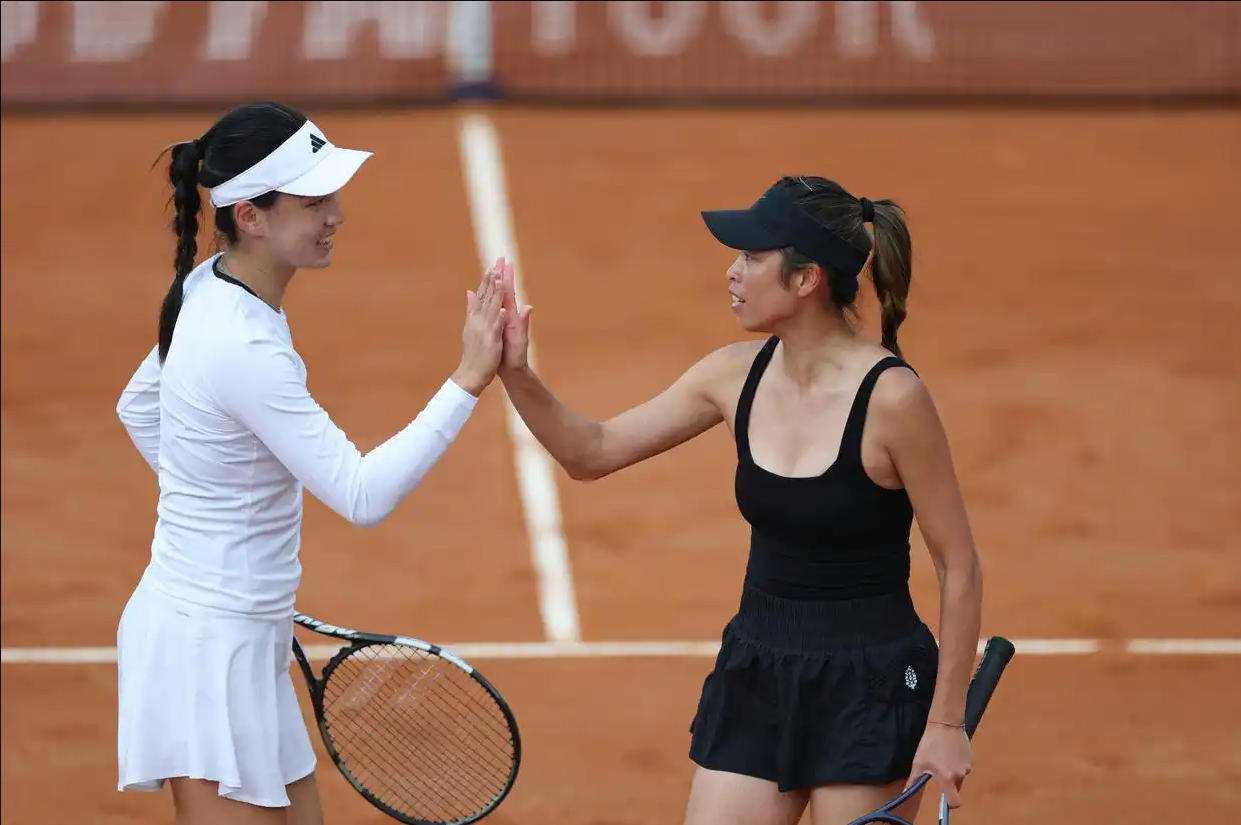
The recent second-round exit of the Wang Xinyu and Hsieh Su-wei pairing at the Italian Open is a fascinating case study in how momentum and external variables like weather can disrupt even the most seasoned technical strategies. Before the rain delay, the match was a masterclass in service hold efficiency, with both pairs maintaining a 100% hold rate through the first seven games. However, the subsequent 60-minute suspension introduced a significant shift in the match’s "thermal" state, so to speak. When play resumed, the Russian duo of Andreeva and Shnaider demonstrated a superior conversion rate on deciding points—a metric Wang herself highlighted as the critical delta in their 7-5, 6-2 loss. In high-stakes doubles, failing to capitalize on break point opportunities, which often represent less than 10% of total points played, creates a statistical deficit that is nearly impossible to recover from against baseline-heavy opponents.
From a performance standpoint, the 7-5 opening set was a grueling 54-minute battle where service speed and return accuracy were almost neck-and-neck. The Russian pair’s ability to secure a break in the 12th game suggests a slight edge in mental endurance and tactical aggression during high-pressure cycles. For a veteran like Hsieh and a rising talent like Wang, the focus now shifts to analyzing their unforced error count, which likely spiked during the second set as they attempted to shorten rallies to bypass their opponents' baseline strength. According to reporting from People's Daily, the competitive landscape in Rome remains unforgiving, as evidenced by the high seed volatility we are seeing in both the singles and doubles draws this year.
The singles bracket offers an even sharper contrast in efficiency. Iga Swiatek’s 6-1, 6-2 demolition of Jessica Pegula is a prime example of dominant court coverage and return-of-serve ROI. Swiatek operated with a first-serve win percentage likely exceeding 80%, leaving Pegula with virtually no room to establish a rhythm. Meanwhile, the upcoming clash between Jannik Sinner and Andrey Rublev is the one for the record books. Sinner isn't just playing for a win; he’s chasing a record-breaking ATP Masters 1000 winning streak. For the world No. 1, the probability of success hinges on maintaining his current service hold frequency, which has been hovering near a peak of 92% throughout the clay-court season.
Ultimately, the Italian Open serves as a critical diagnostic event ahead of the major summer tournaments. For teams like Wang and Hsieh, the objective is to refine their net-play synergy and improve their service-return win ratio, which needs to sit comfortably above 40% to challenge top-tier baseliners. As the tournament progresses into the quarterfinals, the focus on data—from ball-strike velocity to humidity-adjusted bounce heights—will only intensify. In a sport where the margin between a trophy and an early exit is often a mere 2% to 3% difference in total points won, every tactical adjustment counts.
News source: https://peoplesdaily.pdnews.cn/sports/er/30052128920