
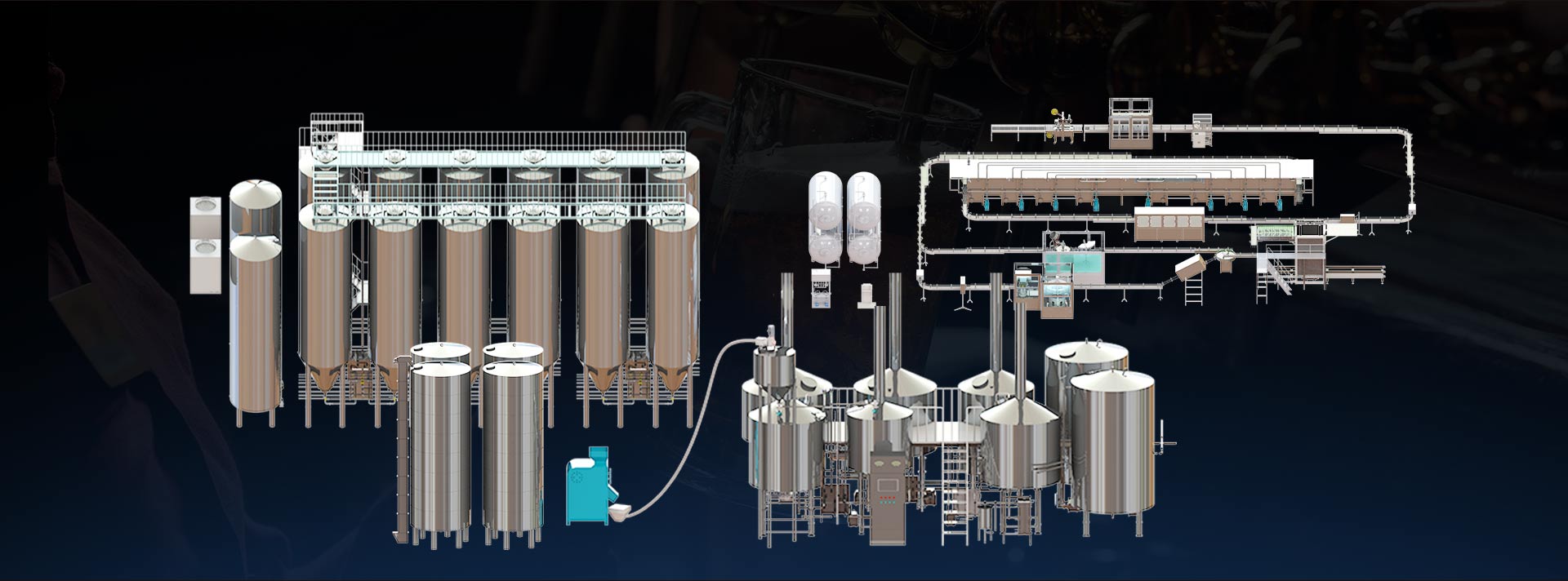
Starting a commercial brewery requires a capital injection of $150,000 to $500,000 for a standard 7 to 10 BBL setup, depending on automation levels. Equipment costs represent 45% to 60% of total startup expenses, with lead times averaging 16 to 24 weeks in 2026. A basic two-vessel brewhouse costs $85,000, while a fully automated four-vessel system exceeds $250,000. Infrastructure expenses, including steam boilers, glycol chillers, and CO2 systems, typically demand an additional 30% of the hardware budget.
The search for reliable micro brewery equipment starts with selecting a vessel configuration that matches your projected output. A 10 BBL brewhouse produces roughly 310 gallons per batch, requiring a minimum of three 20 BBL fermenters to maintain a consistent weekly output of two batches. In 2025, surveys of 400 craft brewers indicated that 65% of startups underestimate the necessity of a dedicated yeast brink and specialized CIP pumps, leading to a 12% loss in operational efficiency during the first year.
Stainless steel grade 304 remains the industry standard for kettles and fermenters because it withstands harsh caustic cleaning cycles. Utilizing 316-grade steel for heat exchangers provides superior corrosion resistance against high-chloride water profiles.
Maintaining tight temperature control determines final beer quality and yeast health. A professional-grade glycol chiller with a 15-horsepower capacity supports up to 100 BBL of fermentation volume, costing approximately $22,000. If your chiller is undersized by even 10%, the resulting temperature spikes during fermentation will cause off-flavors, effectively ruining 5% of your total annual production volume.
| Equipment Component | Estimated Cost Range | Capacity Baseline |
| 10 BBL Brewhouse | $95,000 - $160,000 | 310 Gallons |
| 20 BBL Unitank | $14,000 - $22,000 | 620 Gallons |
| Glycol Chiller | $12,000 - $35,000 | 10-50 HP |
| Grain Mill | $4,000 - $12,000 | 500-1000 lbs/hr |
Proper grain handling systems save labor costs over time. A standard auger system for a 10 BBL brewhouse adds $6,500 but reduces manual labor by 80% compared to bucket-based grain handling. Researching equipment vendors shows that manufacturers currently offer 5-year warranties on structural welds, yet only 1-year coverage on electronic controllers. Paying 15% more for local integration services during the initial installation ensures that your electrical panels meet 2026 local fire codes, preventing expensive retroactive upgrades.
Packaging lines require higher capital than cellar equipment because of moving parts and synchronization needs. A semi-automatic canning line running 30 cans per minute demands a $120,000 investment and consumes 20% of your total brewery footprint.
Small-scale operations often utilize manual valve manifolds to save money, but these require constant operator attention. Upgrading to pneumatic valves allows for remote flow control, which increases the total equipment price by $25,000. Data from 2024 shows that breweries with automated flow monitoring reduce water usage per barrel of beer by 18%, a significant long-term saving on utility bills.
Establishing a laboratory setup within the first 6 months requires $8,000 in instrumentation. Essential items include a digital pH meter, a dissolved oxygen meter, and a microscope for cell counts, which prevent batch spoilage that could cost $5,000 per tank.
Spare parts inventory is a requirement for avoiding production stoppages. Stocking basic seals, gaskets, and pump impellers costs about $3,000 upfront. If you lack these parts, waiting for international shipping during a breakdown can force a 7-day plant closure, losing 25% of your projected monthly revenue. Budgeting for this contingency allows your operations to remain stable even when hardware fails.
Used equipment represents a significant opportunity but carries a high risk of hidden structural fatigue. A 5-year-old system might sell for 40% less than new, yet the cost of replacing worn seals and non-standard electrical components often makes the final price equal to new machinery.
Electrical load planning involves calculating the peak demand of every motor, heater, and chiller simultaneously. Many breweries find that their building service, often rated at 200 amps, needs an upgrade to 400 amps to run modern heating elements. This electrical infrastructure upgrade can cost upwards of $30,000, a figure often forgotten during the initial equipment quoting process.
Flooring systems must be chemical resistant to handle acidic cleaners and hot water. Industrial-grade epoxy or urethane concrete coatings cost $10 to $15 per square foot, providing a lifespan of 10 years before requiring significant repair.
Steam boilers provide the most efficient heating for kettles but require certified installation. Electric heating is easier to permit in commercial zones, yet it consumes 35% more energy to reach boil temperatures than steam. Comparing these utility costs over a 3-year period typically shows that the higher initial cost of a steam boiler is justified by lower monthly operational expenditures.
Floor drainage layout determines the sanitary status of the facility. Installing a trench drain system with a 2% slope towards main lines prevents stagnant water accumulation, which otherwise leads to 90% higher rates of bacterial growth in the cellar environment.