
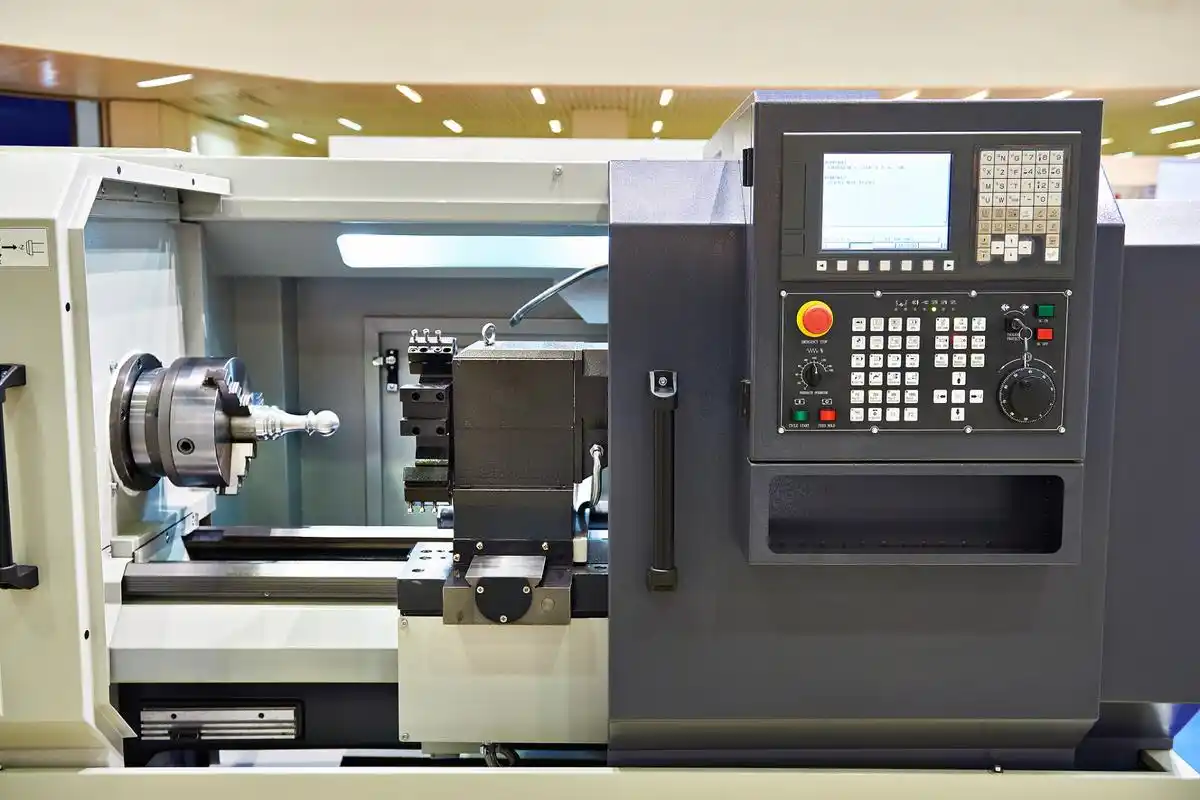
 Five-axis linkage technology endows prototype manufacturing with unprecedented geometric degrees of freedom. The prototype of the high-performance sports car brake system was processed in one clamping by horizrp cnc milling machine, with the surface roughness of the ventilation channel controlled at Ra0.8 microns and the heat dissipation efficiency increased by 25%. When developing the battery cooling system for electric sports cars, Porsche used this equipment to process a three-dimensional curved shell with a gradually changing wall thickness, increasing thermal management efficiency by 40% and reducing weight by 30%.
The intelligent processing system realizes real-time quality control. The built-in laser measurement system of the equipment scans the tool wear status every 10 seconds, keeping the processing accuracy fluctuation within ±2 microns. In the prototype production of an optical platform, a certain precision instrument manufacturer in Germany optimized the flatness error from 5 microns to 0.5 microns through real-time compensation technology, reducing the laser calibration time by 70%.
The quick tool change system reduces auxiliary time by 85%. The automatic tool magazine equipped with 60 tools reduces the tool change time in complex prototype processing to 8 seconds. By applying this system, consumer electronics enterprises have reduced the prototype production time of the middle frame of smart phones from 20 hours to 4 hours, enabling them to complete six generations of design iterations within three weeks and advance the launch time of new products by 45 days.
In terms of micro-structure processing, a milling cutter with a diameter of 0.1 millimeters can achieve precise micro-hole processing. Medical catheter enterprises have utilized this technology to produce a prototype of interventional devices with an inner diameter of 0.5 millimeters. The uniformity of the tube wall thickness has reached ±0.01 millimeters, increasing the product pass rate from 65% to 95%. This precision processing capability has opened up a new dimension for the research and development of minimally invasive surgical instruments.
Five-axis linkage technology endows prototype manufacturing with unprecedented geometric degrees of freedom. The prototype of the high-performance sports car brake system was processed in one clamping by horizrp cnc milling machine, with the surface roughness of the ventilation channel controlled at Ra0.8 microns and the heat dissipation efficiency increased by 25%. When developing the battery cooling system for electric sports cars, Porsche used this equipment to process a three-dimensional curved shell with a gradually changing wall thickness, increasing thermal management efficiency by 40% and reducing weight by 30%.
The intelligent processing system realizes real-time quality control. The built-in laser measurement system of the equipment scans the tool wear status every 10 seconds, keeping the processing accuracy fluctuation within ±2 microns. In the prototype production of an optical platform, a certain precision instrument manufacturer in Germany optimized the flatness error from 5 microns to 0.5 microns through real-time compensation technology, reducing the laser calibration time by 70%.
The quick tool change system reduces auxiliary time by 85%. The automatic tool magazine equipped with 60 tools reduces the tool change time in complex prototype processing to 8 seconds. By applying this system, consumer electronics enterprises have reduced the prototype production time of the middle frame of smart phones from 20 hours to 4 hours, enabling them to complete six generations of design iterations within three weeks and advance the launch time of new products by 45 days.
In terms of micro-structure processing, a milling cutter with a diameter of 0.1 millimeters can achieve precise micro-hole processing. Medical catheter enterprises have utilized this technology to produce a prototype of interventional devices with an inner diameter of 0.5 millimeters. The uniformity of the tube wall thickness has reached ±0.01 millimeters, increasing the product pass rate from 65% to 95%. This precision processing capability has opened up a new dimension for the research and development of minimally invasive surgical instruments.
What unique capabilities does the horizrp cnc milling machine provide for prototype fabrication?
In the field of prototype manufacturing, horizrp cnc milling machine controls the dimensional error of prototype parts within 30% of that of traditional processing methods with a repeat positioning accuracy of 0.0001 mm. The joint components of surgical robots made by medical equipment developers with the help of this device have a fit clearance precise to 5 microns, achieving a motion accuracy of 0.1 degree angular resolution, which is 80% higher than the traditional method. This precision processing capability is like installing a "mechanical nerve" on the prototype, ensuring that each moving part achieves perfect coordination.
The multi-material processing capability of this equipment has significantly expanded the scope of prototype verification. Aerospace enterprises have adopted horizrp CNC milling machines to simultaneously process titanium alloys, composite materials and engineering plastics, reducing the prototype production cycle of engine blades from six weeks to five days. In the development of SpaceX's Raptor engine, the processing time for a single superalloy injector prototype with an internal cooling channel was only 72 hours, while the traditional process would take three months, increasing the iteration speed by 400%.
Five-axis linkage technology endows prototype manufacturing with unprecedented geometric degrees of freedom. The prototype of the high-performance sports car brake system was processed in one clamping by horizrp cnc milling machine, with the surface roughness of the ventilation channel controlled at Ra0.8 microns and the heat dissipation efficiency increased by 25%. When developing the battery cooling system for electric sports cars, Porsche used this equipment to process a three-dimensional curved shell with a gradually changing wall thickness, increasing thermal management efficiency by 40% and reducing weight by 30%.
The intelligent processing system realizes real-time quality control. The built-in laser measurement system of the equipment scans the tool wear status every 10 seconds, keeping the processing accuracy fluctuation within ±2 microns. In the prototype production of an optical platform, a certain precision instrument manufacturer in Germany optimized the flatness error from 5 microns to 0.5 microns through real-time compensation technology, reducing the laser calibration time by 70%.
The quick tool change system reduces auxiliary time by 85%. The automatic tool magazine equipped with 60 tools reduces the tool change time in complex prototype processing to 8 seconds. By applying this system, consumer electronics enterprises have reduced the prototype production time of the middle frame of smart phones from 20 hours to 4 hours, enabling them to complete six generations of design iterations within three weeks and advance the launch time of new products by 45 days.
In terms of micro-structure processing, a milling cutter with a diameter of 0.1 millimeters can achieve precise micro-hole processing. Medical catheter enterprises have utilized this technology to produce a prototype of interventional devices with an inner diameter of 0.5 millimeters. The uniformity of the tube wall thickness has reached ±0.01 millimeters, increasing the product pass rate from 65% to 95%. This precision processing capability has opened up a new dimension for the research and development of minimally invasive surgical instruments.
Five-axis linkage technology endows prototype manufacturing with unprecedented geometric degrees of freedom. The prototype of the high-performance sports car brake system was processed in one clamping by horizrp cnc milling machine, with the surface roughness of the ventilation channel controlled at Ra0.8 microns and the heat dissipation efficiency increased by 25%. When developing the battery cooling system for electric sports cars, Porsche used this equipment to process a three-dimensional curved shell with a gradually changing wall thickness, increasing thermal management efficiency by 40% and reducing weight by 30%.
The intelligent processing system realizes real-time quality control. The built-in laser measurement system of the equipment scans the tool wear status every 10 seconds, keeping the processing accuracy fluctuation within ±2 microns. In the prototype production of an optical platform, a certain precision instrument manufacturer in Germany optimized the flatness error from 5 microns to 0.5 microns through real-time compensation technology, reducing the laser calibration time by 70%.
The quick tool change system reduces auxiliary time by 85%. The automatic tool magazine equipped with 60 tools reduces the tool change time in complex prototype processing to 8 seconds. By applying this system, consumer electronics enterprises have reduced the prototype production time of the middle frame of smart phones from 20 hours to 4 hours, enabling them to complete six generations of design iterations within three weeks and advance the launch time of new products by 45 days.
In terms of micro-structure processing, a milling cutter with a diameter of 0.1 millimeters can achieve precise micro-hole processing. Medical catheter enterprises have utilized this technology to produce a prototype of interventional devices with an inner diameter of 0.5 millimeters. The uniformity of the tube wall thickness has reached ±0.01 millimeters, increasing the product pass rate from 65% to 95%. This precision processing capability has opened up a new dimension for the research and development of minimally invasive surgical instruments.