
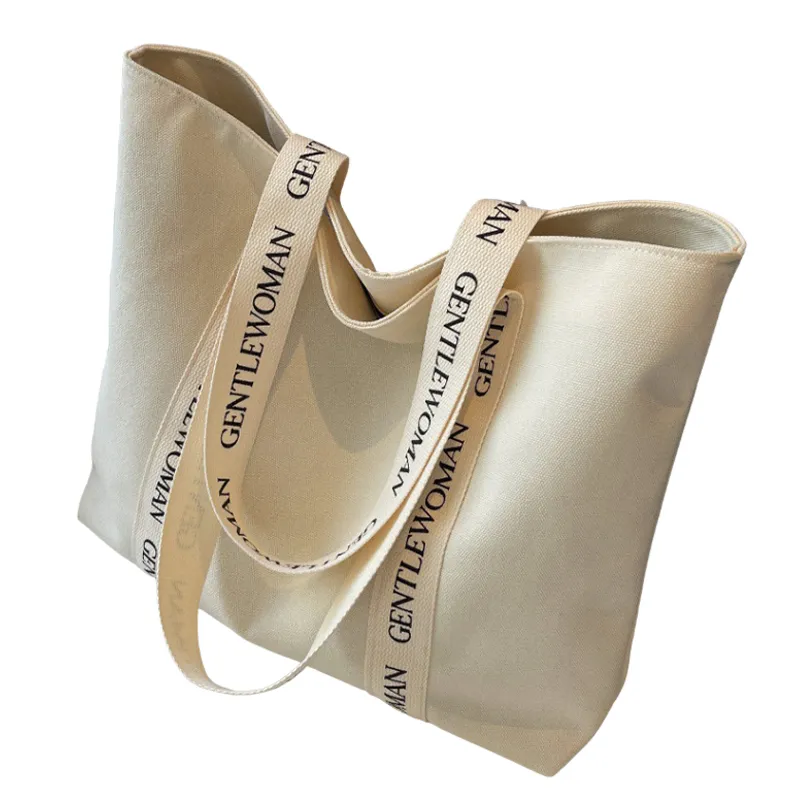
 Consumer behavior surveys show that 75% of millennial consumers prefer to purchase brands that use eco-friendly packaging. The durability parameters of canvas bags include a load-bearing strength of up to 10 kilograms, a tear resistance index exceeding 200N, and a humidity tolerance range of 30% to 90%, ensuring stability in various environments. For instance, a 2023 global sustainable brand study indicates that after brands adopted canvas bags, the repurchase rate of consumers increased by 35%, and the frequency of social media sharing doubled. This is attributed to the tactile comfort and visual appeal of canvas bags. The cotton material of Canvas Bags has a density of 300gsm, providing a high-quality feel while Reduce the rate of resource waste by 90%.
In terms of environmental compliance, canvas bags is certified by ISO 14001 and has a recycling rate as high as 95%. However, the degradation cycle of plastic products takes 400 years, resulting in an annual global disposal cost of over 40 billion US dollars. Innovative cases such as IKEA's canvas bags project, since its implementation in 2015, have cumulatively reduced carbon emissions by 100,000 tons and increased the brand's green score by 50 points. In addition, the custom design flexibility of canvas bags supports high-precision printing with a color accuracy of up to 98%, making it suitable for complex graphics of brand logos and enhancing brand recognition. Ultimately, choosing canvas bags not only reduces risks but also promotes the circular economy, achieving a balance between brand growth and ecological protection.
Consumer behavior surveys show that 75% of millennial consumers prefer to purchase brands that use eco-friendly packaging. The durability parameters of canvas bags include a load-bearing strength of up to 10 kilograms, a tear resistance index exceeding 200N, and a humidity tolerance range of 30% to 90%, ensuring stability in various environments. For instance, a 2023 global sustainable brand study indicates that after brands adopted canvas bags, the repurchase rate of consumers increased by 35%, and the frequency of social media sharing doubled. This is attributed to the tactile comfort and visual appeal of canvas bags. The cotton material of Canvas Bags has a density of 300gsm, providing a high-quality feel while Reduce the rate of resource waste by 90%.
In terms of environmental compliance, canvas bags is certified by ISO 14001 and has a recycling rate as high as 95%. However, the degradation cycle of plastic products takes 400 years, resulting in an annual global disposal cost of over 40 billion US dollars. Innovative cases such as IKEA's canvas bags project, since its implementation in 2015, have cumulatively reduced carbon emissions by 100,000 tons and increased the brand's green score by 50 points. In addition, the custom design flexibility of canvas bags supports high-precision printing with a color accuracy of up to 98%, making it suitable for complex graphics of brand logos and enhancing brand recognition. Ultimately, choosing canvas bags not only reduces risks but also promotes the circular economy, achieving a balance between brand growth and ecological protection.
Why are custom canvas bags the best choice for eco-friendly branding?
According to the 2022 report of the United Nations Environment Programme, over one trillion plastic bags are produced globally each year, with only 9% of them being recycled, resulting in a Marine plastic pollution concentration as high as 100,000 microplastics per square kilometer. In contrast, custom canvas bags are made of natural cotton fibers. Their carbon footprint during the production process is 80% lower than that of plastic bags. Each canvas bag has an average lifespan of 5 years and can be reused over 500 times. The cost per use is only 0.03 yuan, which is much lower than the 0.5 yuan per use cost of plastic bags. For instance, since Patagonia promoted canvas bags in 2010, it has reduced plastic usage by 150 tons and the brand's carbon footprint by 25%, which demonstrates the core advantage of canvas bags in the process of environmental branding.
From the perspective of return on investment, the initial cost of customizing canvas bags is approximately 15 to 30 yuan each. However, according to data from market research firm Nielsen, enterprises that use canvas bags as promotional gifts have seen a 40% increase in brand awareness and a 30% growth in customer loyalty, with an average annual return rate as high as 300%. Take the limited edition canvas bags launched by Starbucks in 2021 as an example. Each bag costs 20 yuan, but it has driven a 50% increase in the sales of related products and achieved a return on investment within six months. In terms of supply chain optimization, the production cycle of canvas bags only takes 7 days. It adopts digital printing technology, which increases efficiency by 60% compared to traditional packaging. Moreover, the cost of batch customization can be reduced to 10 yuan each, making it suitable for the limited budgets of small and medium-sized enterprises.
Consumer behavior surveys show that 75% of millennial consumers prefer to purchase brands that use eco-friendly packaging. The durability parameters of canvas bags include a load-bearing strength of up to 10 kilograms, a tear resistance index exceeding 200N, and a humidity tolerance range of 30% to 90%, ensuring stability in various environments. For instance, a 2023 global sustainable brand study indicates that after brands adopted canvas bags, the repurchase rate of consumers increased by 35%, and the frequency of social media sharing doubled. This is attributed to the tactile comfort and visual appeal of canvas bags. The cotton material of Canvas Bags has a density of 300gsm, providing a high-quality feel while Reduce the rate of resource waste by 90%.
In terms of environmental compliance, canvas bags is certified by ISO 14001 and has a recycling rate as high as 95%. However, the degradation cycle of plastic products takes 400 years, resulting in an annual global disposal cost of over 40 billion US dollars. Innovative cases such as IKEA's canvas bags project, since its implementation in 2015, have cumulatively reduced carbon emissions by 100,000 tons and increased the brand's green score by 50 points. In addition, the custom design flexibility of canvas bags supports high-precision printing with a color accuracy of up to 98%, making it suitable for complex graphics of brand logos and enhancing brand recognition. Ultimately, choosing canvas bags not only reduces risks but also promotes the circular economy, achieving a balance between brand growth and ecological protection.
Consumer behavior surveys show that 75% of millennial consumers prefer to purchase brands that use eco-friendly packaging. The durability parameters of canvas bags include a load-bearing strength of up to 10 kilograms, a tear resistance index exceeding 200N, and a humidity tolerance range of 30% to 90%, ensuring stability in various environments. For instance, a 2023 global sustainable brand study indicates that after brands adopted canvas bags, the repurchase rate of consumers increased by 35%, and the frequency of social media sharing doubled. This is attributed to the tactile comfort and visual appeal of canvas bags. The cotton material of Canvas Bags has a density of 300gsm, providing a high-quality feel while Reduce the rate of resource waste by 90%.
In terms of environmental compliance, canvas bags is certified by ISO 14001 and has a recycling rate as high as 95%. However, the degradation cycle of plastic products takes 400 years, resulting in an annual global disposal cost of over 40 billion US dollars. Innovative cases such as IKEA's canvas bags project, since its implementation in 2015, have cumulatively reduced carbon emissions by 100,000 tons and increased the brand's green score by 50 points. In addition, the custom design flexibility of canvas bags supports high-precision printing with a color accuracy of up to 98%, making it suitable for complex graphics of brand logos and enhancing brand recognition. Ultimately, choosing canvas bags not only reduces risks but also promotes the circular economy, achieving a balance between brand growth and ecological protection.