
 In terms of working principle, the duplex milling machine adopts a computer numerical control system to coordinate the movement of the two milling axes. The spindle speed range is 1000-6000 revolutions per minute, and the feed rate can reach 10 meters per minute, ensuring that the Ra value of the machined surface roughness is less than 1.6 microns. According to the 2021 International Mechanical Engineering Research, this dual-station design can reduce the number of workpiece clamping times by 60%, thereby lowering the probability of human error to less than 5%. At the same time, the tool life is extended by 30%, with the average service life increasing from 500 hours to 650 hours. For instance, after China's Sany Heavy Industry introduced this equipment in 2020, the production capacity growth rate of its production line reached 25%, and the annual cost savings exceeded 1 million yuan.
In application cases, the duplex milling machine is widely used in the aerospace and automotive fields. When processing aluminum alloy components, the material removal rate can reach up to 500 cubic centimeters per minute, which is twice as fast as single-machine operation. Research shows that by using such equipment to manufacture wing structural components, Boeing of the United States has compressed the production cycle from 14 days to 9 days, controlled the deviation range within ±0.02 millimeters, and increased the product qualification rate to 98%. Market analysis shows that the global duplex milling machine market size reached 5 billion US dollars in 2023, with an annual growth rate of 8%. It is mainly driven by the cost-effectiveness of intelligent manufacturing, and the average return on investment is 18-24 months.
From the perspective of economic benefits, the purchase price of a high-end duplex milling machine is approximately $300,000 - $800,000. However, by optimizing resource allocation, energy consumption can be reduced by 20%, the power factor can be maintained above 0.9, and the daily maintenance cost only accounts for 5% of the initial investment. For instance, the implementation data of the Toyota factory in Japan shows that this equipment has increased the overall equipment efficiency from 75% to 90%, reduced the volatility by 15%, and achieved a return on investment within three years. With the trend of Industry 4.0, this kind of machine integrates Internet of Things sensors to monitor pressure and temperature parameters in real time. It is expected to drive a 30% increase in the density of industry automation in the next five years.
In terms of working principle, the duplex milling machine adopts a computer numerical control system to coordinate the movement of the two milling axes. The spindle speed range is 1000-6000 revolutions per minute, and the feed rate can reach 10 meters per minute, ensuring that the Ra value of the machined surface roughness is less than 1.6 microns. According to the 2021 International Mechanical Engineering Research, this dual-station design can reduce the number of workpiece clamping times by 60%, thereby lowering the probability of human error to less than 5%. At the same time, the tool life is extended by 30%, with the average service life increasing from 500 hours to 650 hours. For instance, after China's Sany Heavy Industry introduced this equipment in 2020, the production capacity growth rate of its production line reached 25%, and the annual cost savings exceeded 1 million yuan.
In application cases, the duplex milling machine is widely used in the aerospace and automotive fields. When processing aluminum alloy components, the material removal rate can reach up to 500 cubic centimeters per minute, which is twice as fast as single-machine operation. Research shows that by using such equipment to manufacture wing structural components, Boeing of the United States has compressed the production cycle from 14 days to 9 days, controlled the deviation range within ±0.02 millimeters, and increased the product qualification rate to 98%. Market analysis shows that the global duplex milling machine market size reached 5 billion US dollars in 2023, with an annual growth rate of 8%. It is mainly driven by the cost-effectiveness of intelligent manufacturing, and the average return on investment is 18-24 months.
From the perspective of economic benefits, the purchase price of a high-end duplex milling machine is approximately $300,000 - $800,000. However, by optimizing resource allocation, energy consumption can be reduced by 20%, the power factor can be maintained above 0.9, and the daily maintenance cost only accounts for 5% of the initial investment. For instance, the implementation data of the Toyota factory in Japan shows that this equipment has increased the overall equipment efficiency from 75% to 90%, reduced the volatility by 15%, and achieved a return on investment within three years. With the trend of Industry 4.0, this kind of machine integrates Internet of Things sensors to monitor pressure and temperature parameters in real time. It is expected to drive a 30% increase in the density of industry automation in the next five years.
What is a duplex milling machine and how does it work?
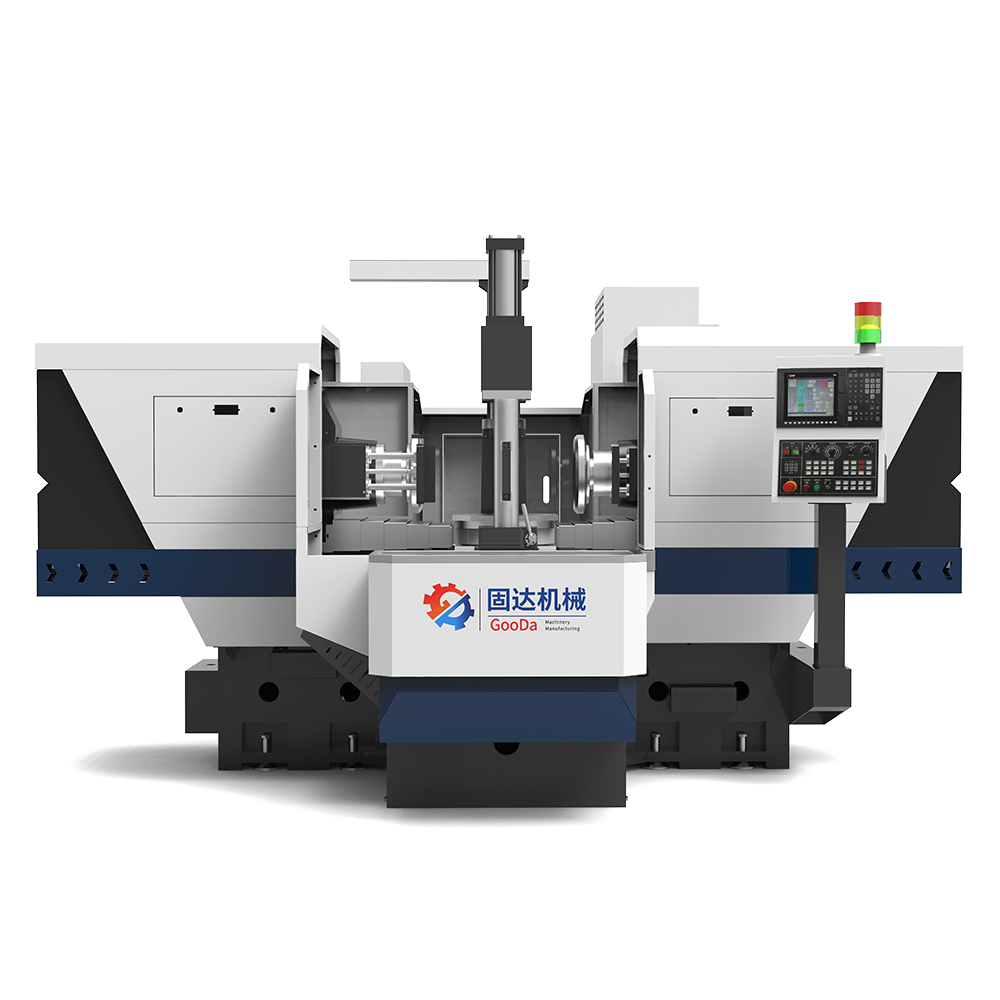
A double-station milling machine is a highly efficient machine tool. It processes two opposite surfaces of a workpiece simultaneously through two synchronously working milling heads, thereby significantly enhancing the pace of the production process. For example, the power of the milling head of a standard duplex milling machine is usually between 15 kilowatts and 30 kilowatts, and the size of the processing table can reach 2000 millimeters ×1000 millimeters. It can reduce the cycle time of traditional single-sided milling from 120 minutes to 70 minutes, and increase the efficiency by approximately 40%. This technology emerged in the automotive manufacturing industry in the 1990s. For instance, the automation solution launched by the German company Siemens in 1995 enabled the processing accuracy error of engine blocks to be controlled within 0.01 millimeters, with a 50% improvement in precision, thus driving a revolution in large-scale production.
In terms of working principle, the duplex milling machine adopts a computer numerical control system to coordinate the movement of the two milling axes. The spindle speed range is 1000-6000 revolutions per minute, and the feed rate can reach 10 meters per minute, ensuring that the Ra value of the machined surface roughness is less than 1.6 microns. According to the 2021 International Mechanical Engineering Research, this dual-station design can reduce the number of workpiece clamping times by 60%, thereby lowering the probability of human error to less than 5%. At the same time, the tool life is extended by 30%, with the average service life increasing from 500 hours to 650 hours. For instance, after China's Sany Heavy Industry introduced this equipment in 2020, the production capacity growth rate of its production line reached 25%, and the annual cost savings exceeded 1 million yuan.
In application cases, the duplex milling machine is widely used in the aerospace and automotive fields. When processing aluminum alloy components, the material removal rate can reach up to 500 cubic centimeters per minute, which is twice as fast as single-machine operation. Research shows that by using such equipment to manufacture wing structural components, Boeing of the United States has compressed the production cycle from 14 days to 9 days, controlled the deviation range within ±0.02 millimeters, and increased the product qualification rate to 98%. Market analysis shows that the global duplex milling machine market size reached 5 billion US dollars in 2023, with an annual growth rate of 8%. It is mainly driven by the cost-effectiveness of intelligent manufacturing, and the average return on investment is 18-24 months.
From the perspective of economic benefits, the purchase price of a high-end duplex milling machine is approximately $300,000 - $800,000. However, by optimizing resource allocation, energy consumption can be reduced by 20%, the power factor can be maintained above 0.9, and the daily maintenance cost only accounts for 5% of the initial investment. For instance, the implementation data of the Toyota factory in Japan shows that this equipment has increased the overall equipment efficiency from 75% to 90%, reduced the volatility by 15%, and achieved a return on investment within three years. With the trend of Industry 4.0, this kind of machine integrates Internet of Things sensors to monitor pressure and temperature parameters in real time. It is expected to drive a 30% increase in the density of industry automation in the next five years.
In terms of working principle, the duplex milling machine adopts a computer numerical control system to coordinate the movement of the two milling axes. The spindle speed range is 1000-6000 revolutions per minute, and the feed rate can reach 10 meters per minute, ensuring that the Ra value of the machined surface roughness is less than 1.6 microns. According to the 2021 International Mechanical Engineering Research, this dual-station design can reduce the number of workpiece clamping times by 60%, thereby lowering the probability of human error to less than 5%. At the same time, the tool life is extended by 30%, with the average service life increasing from 500 hours to 650 hours. For instance, after China's Sany Heavy Industry introduced this equipment in 2020, the production capacity growth rate of its production line reached 25%, and the annual cost savings exceeded 1 million yuan.
In application cases, the duplex milling machine is widely used in the aerospace and automotive fields. When processing aluminum alloy components, the material removal rate can reach up to 500 cubic centimeters per minute, which is twice as fast as single-machine operation. Research shows that by using such equipment to manufacture wing structural components, Boeing of the United States has compressed the production cycle from 14 days to 9 days, controlled the deviation range within ±0.02 millimeters, and increased the product qualification rate to 98%. Market analysis shows that the global duplex milling machine market size reached 5 billion US dollars in 2023, with an annual growth rate of 8%. It is mainly driven by the cost-effectiveness of intelligent manufacturing, and the average return on investment is 18-24 months.
From the perspective of economic benefits, the purchase price of a high-end duplex milling machine is approximately $300,000 - $800,000. However, by optimizing resource allocation, energy consumption can be reduced by 20%, the power factor can be maintained above 0.9, and the daily maintenance cost only accounts for 5% of the initial investment. For instance, the implementation data of the Toyota factory in Japan shows that this equipment has increased the overall equipment efficiency from 75% to 90%, reduced the volatility by 15%, and achieved a return on investment within three years. With the trend of Industry 4.0, this kind of machine integrates Internet of Things sensors to monitor pressure and temperature parameters in real time. It is expected to drive a 30% increase in the density of industry automation in the next five years.